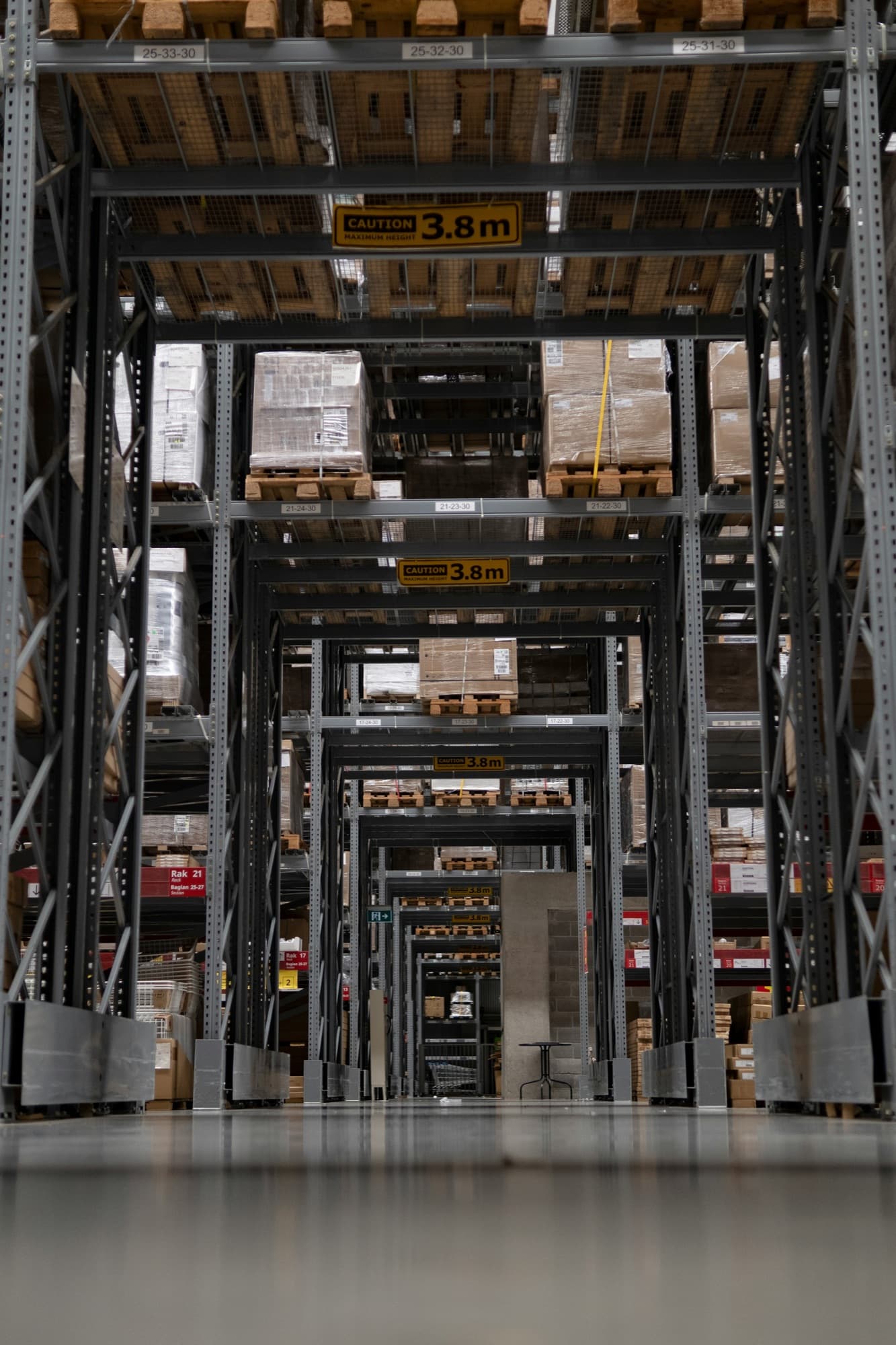
Location and operator identifiers in the product-passport context
ESPR Article 10 connects the product passport through a data carrier to a persistent unique product identifier. Which operator, facility or location identifiers also appear in the passport is defined by the product-group delegated act and the applicable data model. GS1 GLN can uniquely identify locations, legal entities and functions in that context.
Location data is not created only at a desk. Material, production, warehouse and service events often carry a location context. That context matters when teams need to trace where a product, batch or piece of evidence originated.
Which location information becomes useful
Not every movement belongs in the product passport. Relevant location data explains identity, evidence, origin, warehouse state or access rights.
- Location identity (UFI/GLN): Plant, warehouse, supplier or service point with GS1 GLN as stable location identifier where the product-group act or data model requires location identifiers.
- Operator identifier (UOI): Manufacturer, importer, distributor or repair operator as economic actor — relevant in the passport where the applicable legal act defines that role as a data field.
- Events & EPCIS: GS1 EPCIS 2.0 describes production, goods receipt, inspection, relocation and take-back events with GLN-based read points and business locations.
- Responsibility: Which internal or external roles provide, review or approve data — differentiated per location.
Why location data should not become thin content
Location pages or warehouse lists without unique content are risky for SEO. Nulara uses location data as expert context inside real product and compliance workflows, not as mass local landing pages.
That makes the data useful for people and easier for machines to interpret: location, operator, product identifier, evidence and event remain connected, citable entities.
Sources and next steps
The sources show the connection between product identifiers, location identifiers and location/logistics data in the DPP context.
Read next in Nulara
- Digital Product Passport - Foundations for product identity, UPI and access.
- GS1 Digital Link - Web-enabled connection between GLN/GTIN and product information.
- Traceability - Serial, batch and model level in the DPP context.
Primary sources
- EUR-Lex: Regulation (EU) 2024/1781, Articles 9 and 10 - ESPR framework for DPP requirements, data carriers, unique product identifiers and product-group-specific data duties.
- GS1: Global Location Number (GLN) - GS1 identification key for physical locations, legal entities and functions.
- GS1 Digital Link standard - GLN, GTIN, SSCC and serialized extensions in web and EPCIS contexts.
- GS1 EPCIS and CBV 2.0 - Standard for supply-chain events with read point, business location and object context.
Frequently asked questions
- Is Nulara a warehouse management system?
- No. Nulara structures the product-passport and compliance context of warehouse and location data and can use operational systems as sources.
- What is the difference between GS1 GTIN, GLN and SSCC?
- GTIN identifies products and variants, GLN identifies locations, legal entities or functions, and SSCC identifies logistics units. In GS1 setups, these keys can connect product, location, operator and logistics context for the product passport.
- Which location data is relevant for the DPP?
- Relevant location data explains product identity, origin, evidence, approvals or lifecycle events. Whether concrete UFI/UOI fields are required depends on the product-group act and data model.